
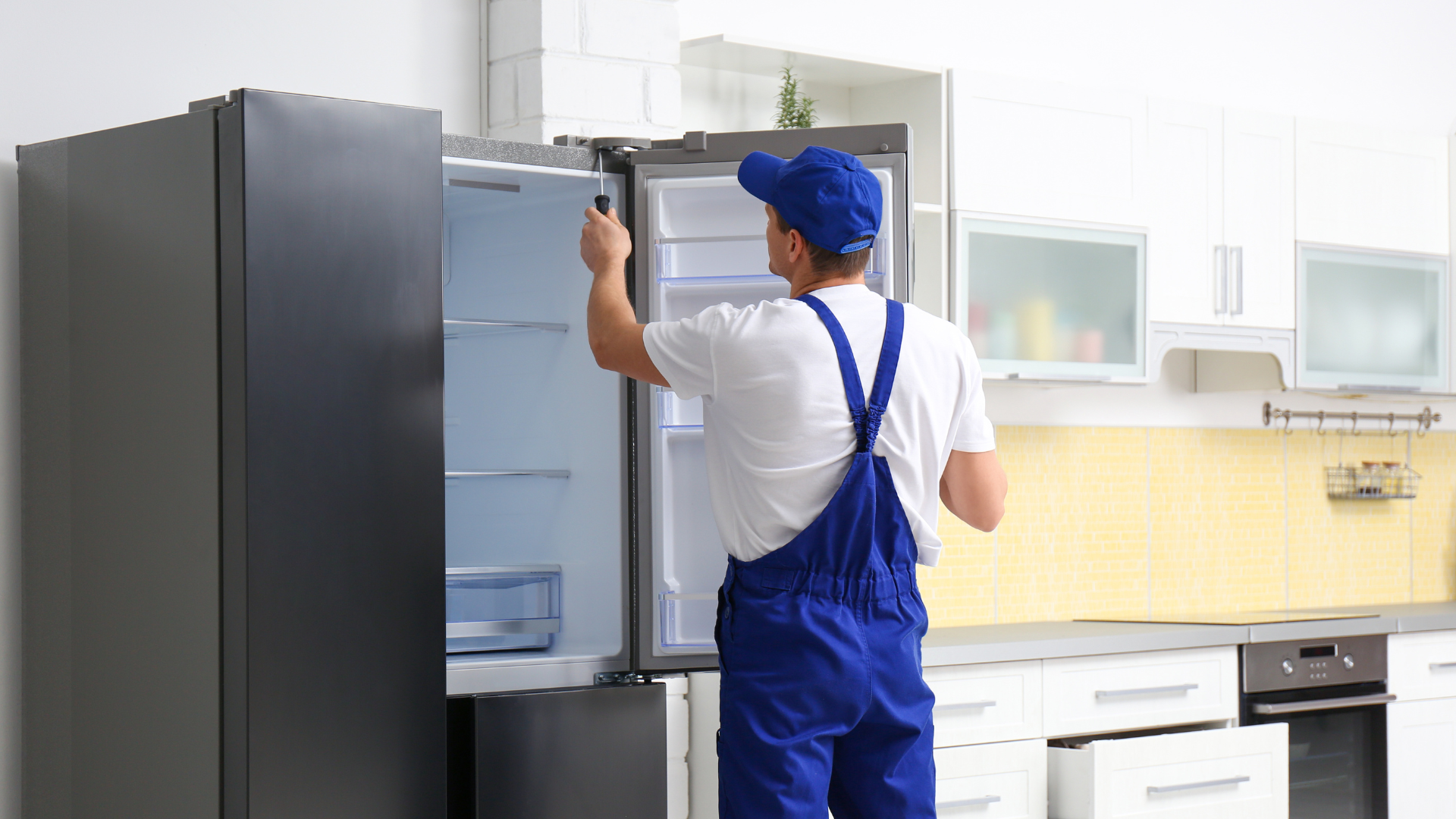
Picture this: it’s a Wednesday evening. You swing open the fridge door to grab something for dinner and notice the milk sitting at room temperature. The cheese feels soft. There’s a low hum that wasn’t there last week. That sinking feeling hits — because you already know what’s coming.
For homeowners across Etobicoke and West Toronto, a fridge acting up is one of those problems that tends to snowball fast. It starts with slightly warm shelves. Left alone, it turns into spoiled groceries, a stressed-out compressor, and a repair bill that could’ve been half the price if caught two weeks earlier.
At SAM Appliance Repairs, we’ve been doing fridge repair in Etobicoke long enough to have seen the same issues cycle through households over and over. This post is an honest breakdown of what goes wrong, what you can handle yourself, what you should leave to a tech, and — most importantly — how to not get taken for a ride when something breaks.
Why Etobicoke Homes Are Surprisingly Hard on Fridges
Most people don’t think of their neighbourhood as affecting how their fridge performs — but it does. Etobicoke gets humid summers and cold winters, and that swing plays a real role in appliance wear. High summer humidity makes your fridge work overtime just to keep up. Condenser coils collect more dust and lint in homes with carpets and pets. Door gaskets soften and crack faster when exposed to repeated temperature changes near exterior walls.
We also hear this a lot from homeowners in areas like Long Branch, Rexdale, and Islington: older housing stock with tighter kitchens means fridges often get wedged in with minimal airflow around them. A fridge that can’t breathe runs hotter and breaks down faster — it’s that simple.
Add to that the fact that most households are running fridges that are 8 to 12 years old (the average lifespan of a mid-range fridge is roughly 10–15 years), and you’ve got a lot of appliances hitting the age where parts start failing. Not because they were poorly made, but because they’ve just done their time.
The Most Common Fridge Problems We See — and What Actually Causes Them
1. The Fridge Isn’t Cooling, But the Freezer Seems Fine
This is one of the most frequent calls we get. You open the freezer — ice cream is solid, everything’s frozen. Open the fridge side, and it’s closer to room temperature. What gives?
Nine times out of ten, the culprit is the air damper — a small flap that controls how much cold air flows from the freezer into the fridge compartment. When it gets stuck shut, cold air can’t cross over. It can also be a blocked or frozen evaporator coil. The cold air is there, it just can’t circulate.
We see this constantly with Samsung and LG French door models in Etobicoke — both popular brands in the area, and both known for damper and defrost system issues around years 5 to 7.
2. Fridge Completely Stopped Cooling
When neither side is cooling, you’re usually looking at one of three things: dirty condenser coils that have caused the compressor to overheat and shut off, a dead evaporator fan motor, or a failing compressor. Of these, dirty coils are the easiest and cheapest fix — often a $0 DIY job with a vacuum. Compressor failure is the most expensive and is usually the conversation where we have to discuss whether repair or replacement makes more sense.
One tech on a popular appliance repair forum put it plainly: “If the compressor clicks on, runs for a few seconds, then clicks off — that start relay is your first suspect. It’s a $15 part and takes 10 minutes to swap. Try that before you panic about the compressor itself.” Solid advice, and we’d echo it.
3. Water Pooling Under the Crisper Drawers
This one is almost always a blocked defrost drain. Modern frost-free fridges run a defrost cycle several times a day, melting any frost that builds up on the evaporator coils. That water drips into a drain tube and flows to a drip pan at the bottom. When the drain clogs — with ice, food debris, or mold — the water backs up and pools inside the fridge.
The fix is straightforward: clear the drain with hot water and a small brush. But if it keeps blocking, the defrost heater or thermostat might not be doing its job, which is a bigger issue. This is something we handle often in appliance repair in Etobicoke calls — simple to diagnose, quick to fix.
4. Loud or Unusual Noises
A fridge makes a certain amount of noise — a low hum from the compressor, the occasional click of the thermostat cycling, maybe some ice dropping in the freezer. What you’re NOT supposed to hear: grinding, loud rattling, buzzing from the back panel, or a constant high-pitched whine.
Grinding usually means worn evaporator fan motor bearings. Rattling from the back often points to loose condenser fan blades or debris caught in the fan. A loud click-click-click every few minutes is typically the compressor start relay trying and failing to kick the compressor on.
Don’t ignore unusual noises. They’re the fridge’s way of telling you something is wearing out — and catching it before it fully fails saves a lot of money.
5. Ice Maker Issues
Ice maker calls are probably our most frequent single-issue service job. The problems range from a completely dead ice maker to hollow cubes, slow production, or a unit that won’t stop making ice. The most common culprits are a clogged or expired water filter, a frozen water supply line, a faulty water inlet valve, or a failed ice maker assembly.
Water filter replacements are a DIY job — they should be done every six months anyway. Everything else is worth having a tech look at, especially the inlet valve, which requires shutting off the water supply and dealing with fittings.
6. Door Seal (Gasket) Worn Out
This one gets overlooked more than almost anything else. A worn door gasket lets warm air seep into the fridge constantly, which forces the compressor to run non-stop. You’ll notice higher hydro bills, condensation around the door edges, and uneven temperatures. The dollar bill test is the classic way to check: close the door on a dollar bill. If you can slide it out without resistance, the seal isn’t doing its job.
Gasket replacement is one of the most cost-effective repairs you can make. It’s fast, inexpensive, and the improvement in efficiency is immediate.
DIY vs. Calling a Pro: An Honest Breakdown
Online forums are full of people confidently telling you to just replace the start relay yourself, or thaw the evaporator coils with a hair dryer, and everything will be fine. And sometimes? They’re right. Other times, it’s four hours of YouTube, the wrong part ordered twice, and the same problem a week later.
Here’s a realistic guide to what’s actually DIY-friendly:
- Safe to DIY: Cleaning condenser coils (vacuum the back/bottom of the fridge every 6–12 months). This alone prevents a huge percentage of fridge breakdowns.
- Safe to DIY: Replacing the water filter — straightforward, tool-free, instructions are in your manual.
- Safe to DIY: Testing and replacing the start relay — it’s cheap, accessible, and you can rattle it to check if it’s bad (it’ll sound like there’s something loose inside).
- Safe to DIY: Clearing a clogged defrost drain with hot water — messy but not technical.
- Call a tech: Anything involving refrigerant. This requires EPA certification in Canada and the right recovery equipment. There’s no legal or safe DIY route.
- Call a tech: Compressor replacement. High cost, high labour, and if you get it wrong you’re buying a new fridge anyway.
- Call a tech: Control board issues. Modern fridges have complex electronics — misdiagnosis here is expensive.
- Call a tech: Sealed system faults (evaporator or condenser coil leaks). These need vacuum pumps and refrigerant gauges.
The general rule: if it involves opening the sealed system, touching electrical boards, or handling refrigerant, get a professional. For everything else, a bit of research goes a long way.
Is Your Fridge Worth Repairing? The Honest Answer
The question we get asked on almost every service call: “Should I just buy a new one?”
Here’s the framework we use: if the repair cost is more than 50% of what a comparable new fridge would cost, and your unit is over 10 years old, it’s usually time to replace. But if your fridge is under 8 years old and the issue is isolated — a fan motor, a thermostat, a gasket — repair almost always wins financially.
A decent new fridge in Canada right now runs between $900 and $1,400 for a mid-range model. A typical evaporator fan repair might be $150–$250 all-in. A compressor replacement on a 5-year-old fridge might run $400–$500. The math clearly favours repair in most cases.
Where it gets murkier is when a fridge has had multiple issues in a short period, or when it’s an older model with parts that are becoming hard to source. In those cases, we’ll always give you our honest read — including telling you when it’s not worth putting more money into.
What to Do Immediately When Your Fridge Stops Working
Before you call anyone, run through this quick list:
- Check that it’s plugged in. Sounds obvious, but it gets missed. Also check the circuit breaker — fridges share circuits with other kitchen appliances sometimes.
- Check the temperature dial inside the fridge — it can get nudged to the warmest setting accidentally, especially in households with kids.
- Listen for the compressor. If you can hear it running, the problem is usually in airflow or fans, not the compressor itself.
- Check behind the fridge — make sure it hasn’t been pushed tight against the wall, blocking the condenser fan.
- If it’s warm inside, move dairy, meat, and leftovers to a cooler with ice immediately. Don’t wait.
- If the freezer is still working, use it as a temporary refuge for your most perishable items.
Running through this takes five minutes and occasionally reveals a fix that costs nothing.
Quick Maintenance Habits That Prevent Most Fridge Breakdowns
After years of doing appliance repair in Mississauga, freezer repair in Etobicoke, and everything in between across West Toronto, we can tell you: most of the calls we get were preventable. Here’s what makes the difference:
- Clean the condenser coils every 6–12 months. Pull the fridge out from the wall and vacuum the coils. This single step, according to appliance repair specialists, can eliminate over 70% of fridge service calls. The coils are either on the back of the fridge or along the bottom behind the kick plate.
- Check your door gaskets monthly. Use the dollar bill test. A failing gasket quietly runs up your hydro bill and shortens the life of your compressor.
- Don’t overpack the fridge. Blocked internal vents create warm spots and force the unit to work harder. Keep a bit of space around shelves so air can circulate.
- Replace the water filter every 6 months. A clogged filter stresses the inlet valve and ice maker — two repairs that cost a lot more than the filter did.
- Keep temperatures set correctly. Fridge at 2–4°C, freezer at -18°C. If your fridge has been nudged warmer than this, it’s slowly spoiling food and running inefficiently.
- Give it breathing room. A few inches behind and on each side allows heat to dissipate properly. Cramped installations in tight kitchens are a real issue in older Etobicoke homes.
Brands We Work on Most in Etobicoke and West Toronto
We service all major brands, but here’s what shows up most in our bookings across Etobicoke and the surrounding area:
- Samsung — French door and Family Hub models are popular in the area. Ice maker and control board issues are common after years 4–6.
- LG — Linear compressor failures are a known issue on certain models — LG has had class action settlements around this. We see it regularly.
- Whirlpool / Maytag — Reliable and long-lived, but defrost system components (heater, thermostat, timer) tend to fail around years 8–10.
- GE / GE Profile — Water inlet valves and ice maker assemblies are the most common service calls.
- Bosch — Growing in popularity in newer Etobicoke builds. European-style cooling requires brand-specific knowledge; not every tech is trained on it.
- Frigidaire / Electrolux — Ice maker and damper assembly issues are what we see most. Generally sturdy otherwise.
Our Service Area: Etobicoke, Mississauga, and All of West Toronto
SAM Appliance Repairs covers the full west end of the GTA. Whether you need fridge repair in Etobicoke, appliance repair in Mississauga, or you’re right in the heart of West Toronto — Humber Bay, Mimico, New Toronto, Rexdale, Islington, or anywhere along Lakeshore — we can get a technician to you fast.
We offer same-day and next-day appointments in most cases, including evenings and weekends. Fridge problems don’t wait for business hours, and neither do we.
Every service call includes a diagnostic before any work is quoted. We’ll tell you what’s wrong, what it costs to fix, and whether we think it’s worth it — before we touch anything. No surprise charges. Genuine parts. A warranty on labour and parts.
Don’t Wait Until It’s Fully Dead
The most expensive fridge repair is the one that gets ignored until the compressor burns out. What might have been a $100 fan motor replacement becomes a $450 compressor job — or a new fridge entirely.
If your fridge is making noise it didn’t make before, running constantly, showing temperature swings, leaking water, or just not feeling as cold as it should — that’s the time to call. Not after the groceries spoil.
Sam Appliance Repairs is local to the area, and we treat every job the same way we’d want someone to treat ours — straightforward, clean, and honest about what it actually needs. Reach out any time to book a service call for fridge repair in Etobicoke or anywhere across West Toronto and Mississauga.