
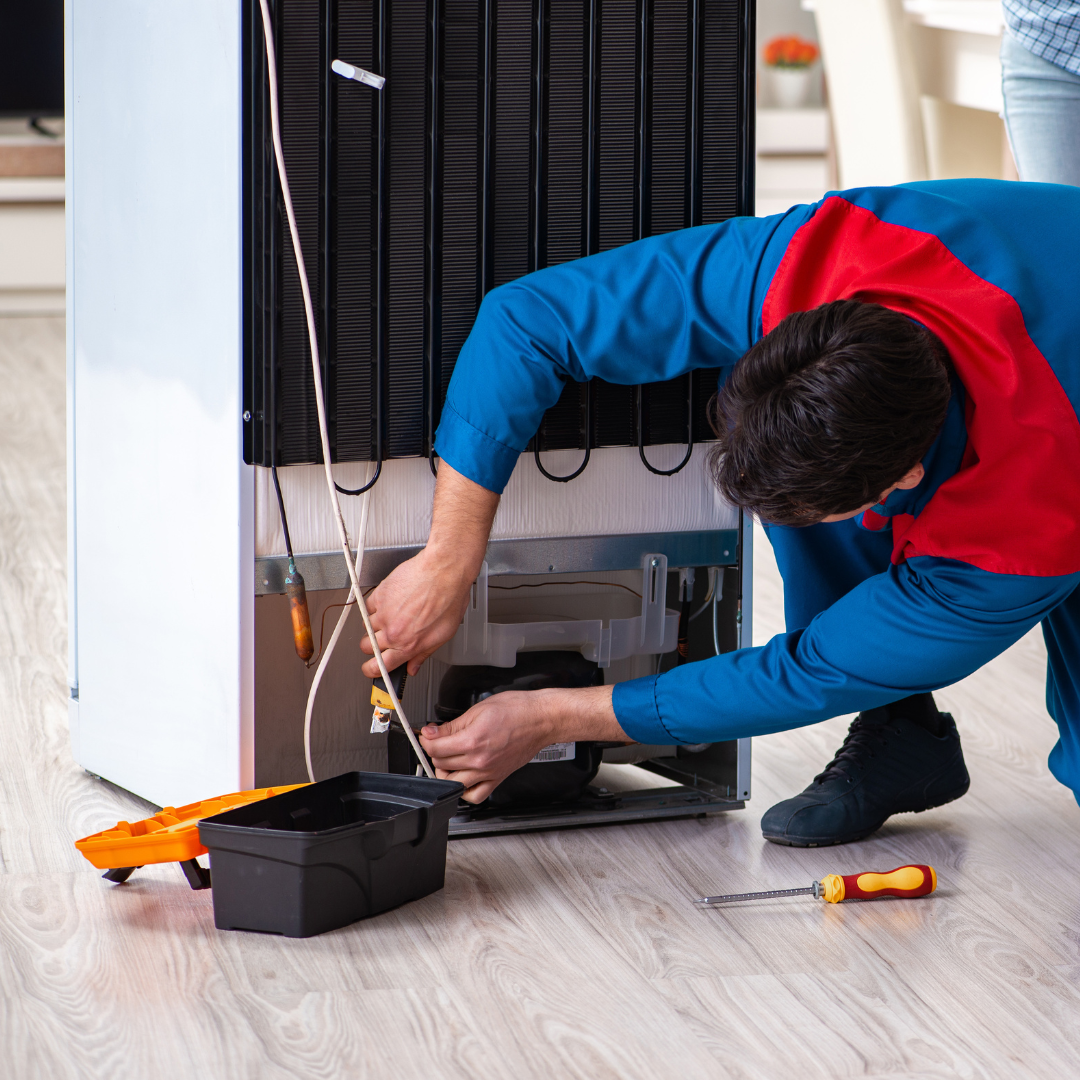
The Heart of Your Fridge: What the Compressor Actually Does
Why Compressors Fail in the First Place
Blocked ventilation is a silent killer. When dust and pet hair accumulate around the compressor housing, heat has nowhere to escape. The motor winds up running hotter than designed, and eventually the thermal overload protection shuts it down—or the motor burns out entirely.
Electrical component failure is another frequent culprit. The start relay and overload capacitor are the compressor’s ignition system. When either one fails, the motor can’t kick over. You’ll often hear a clicking noise as the relay tries and fails to engage.
Refrigerant loss changes everything. Whether from a corroded line, a failed seal, or physical damage, a leak means the compressor has to run longer and work harder to achieve the same cooling effect. That overwork is what ultimately destroys the motor.
Simple old age catches up eventually. Most residential compressors are engineered for about a decade of service, sometimes stretching to fifteen years in well-maintained units. After that, internal wear on bearings and valves becomes unavoidable.
Voltage spikes from summer storms or grid fluctuations can fry the compressor motor’s windings in an instant. A quality surge protector is cheap insurance against a very expensive failure.
Safe Checks You Can Handle Yourself
Listen carefully. Stand at the back of the unit during a cooling cycle. A healthy compressor produces a deep, steady hum. Total silence suggests the motor isn’t receiving power or has failed. Rapid, repetitive clicking usually indicates a start relay struggling to engage—this is actually good news, since relays are inexpensive and replaceable.
Inspect the start relay. After unplugging the refrigerator, locate the relay (it’s a small plastic component attached directly to the compressor terminals). Remove it and give it a gentle shake. If you hear rattling inside, the ceramic disc has fractured and the relay is toast. Replacements are widely available if you have your fridge’s model number.
Clean those coils. Whether they’re mounted on the back panel or tucked underneath behind a grille, coils need to breathe. A long-handled refrigerator coil brush and a vacuum with a crevice attachment will clear out dust bunnies and kitchen grease that act like insulation.
Verify your settings. It sounds obvious, but someone bumping the thermostat dial or a child playing with electronic controls can raise the temperature enough to mimic a compressor failure.
The Hard Truth About DIY Compressor Replacement
Refrigerant regulations are serious business. In most jurisdictions, handling refrigerants requires EPA Section 608 certification. Venting these chemicals into the atmosphere carries federal penalties, and modern refrigerants like R-600a (isobutane) are flammable—turning a mistake into a potential fire or explosion risk.
Electrical danger is real. Compressors draw significant amperage, and incorrect wiring doesn’t just fail to work—it can overheat, arc, and ignite surrounding materials. Capacitors also store lethal voltage even when the unit is unplugged.
Compatibility matters. Compressors are not interchangeable commodities. The wrong displacement, refrigerant type, or electrical characteristics will destroy the replacement and potentially damage the entire sealed system.
Warranty implications are immediate. Most manufacturers void remaining coverage the moment an uncertified person cracks open the refrigeration system. That free repair you might have qualified for becomes a full out-of-pocket expense.
Diagnostic accuracy requires specialized tools. Gauging pressures, checking amp draw, measuring superheat and subcooling—these aren’t guesswork exercises. A misdiagnosis means replacing the wrong part and still having a broken fridge.
Red Flags That Demand Immediate Professional Attention
- The refrigerator runs nonstop but the interior temperature keeps climbing
- Loud buzzing, grinding, or clicking emanates from the rear machinery compartment
- The compressor housing is too hot to touch comfortably
- Perishables spoil within a day or two despite proper settings
- The unit has gone completely dead with no interior lights or cooling
- Secondary functions like through-door ice and water stop working alongside temperature issues
Repair or Replace? Running the Numbers
- Your refrigerator is under eight years old
- It’s a higher-end model with features you value
- The compressor failure appears isolated (no other system problems)
- You’re otherwise happy with the unit’s capacity and layout
- The appliance is over twelve years old
- You’ve already replaced multiple major components
- The sealed system has contamination from a burnout (requiring extensive flushing)
- Energy efficiency improvements would significantly lower your utility bills
Keeping Your Compressor Alive Longer
Twice-yearly coil cleaning is the single most impactful maintenance task you can perform. Mark your calendar for spring and fall.
Maintain rear clearance. That two-inch gap behind your refrigerator isn’t a suggestion—it’s engineering specification for convective airflow. Cramping the unit against a wall traps heat.
Inspect door gaskets monthly. A failed seal leaks cold air, forcing the compressor into overtime. The dollar bill test (close a bill in the door; it should resist sliding out) takes ten seconds.
Let hot food cool before refrigerating it. Introducing thermal mass at 180°F makes the compressor run a marathon to bring the compartment back down.
Set conservative temperatures. The FDA recommends 40°F for fresh food compartments and 0°F for freezers. Colder settings waste energy and cycle the compressor more frequently without food safety benefits.
Manage frost buildup. Manual-defrost freezers need attention when ice exceeds a quarter inch. Even frost-free units can suffer defrost system failures that eventually stress the compressor.
Choosing the Right Repair Service
Verified licensing and insurance. Ask for license numbers and confirm they’re current. General handyman services rarely carry refrigeration-specific credentials.
Factory authorization. Technicians trained and authorized by manufacturers like Sub-Zero, Thermador, KitchenAid, or LG have access to proprietary diagnostic tools and genuine replacement parts.
Upfront pricing structure. You should know the diagnostic cost, the hourly or flat-rate labor charge, and typical part markups before anyone touches your appliance.
Warranty on workmanship. A company confident in its repairs will guarantee both parts and labor for at least ninety days, often a full year.
Local reputation. Check recent reviews specifically mentioning refrigerator or compressor work. A company with stellar dishwasher reviews might be mediocre on sealed system repairs.
Why Toronto Homeowners Trust Sam Appliance Repair for Fridge Repair
When your refrigerator compressor fails, you need a team that responds fast, diagnoses accurately, and fixes it right the first time. At Sam Appliance Repair, we specialize in fridge repair Toronto homeowners can count on—whether it’s a compressor replacement, start relay fix, or full sealed system diagnosis.
- Certified technicians with factory training on Samsung, LG, Whirlpool, GE, Sub-Zero, and more
- Same-day fridge repair across Toronto, North York, Etobicoke, Scarborough, and Mississauga
- Transparent pricing with diagnostic fees applied toward your repair
- Genuine OEM parts backed by a full warranty on labor and components
- No surprise charges—you approve the quote before we start any work
Frequently Asked Questions
You can purchase a compressor, but charging the system with refrigerant without EPA certification violates federal law. Even if you technically complete the mechanical installation, you’ll need a certified technician to evacuate, leak-test, and charge the system. At that point, you’re paying professional rates for the most technical portion anyway.
This is the classic symptom of a failed start relay or capacitor. The thermostat calls for cooling, the relay attempts to engage the compressor motor, but the motor can’t overcome initial torque requirements and the thermal overload trips. The relay cools, resets, and tries again—creating the clicking loop. Replace the relay first; it’s a $20 part versus a $400 compressor.
In normal residential use with reasonable maintenance, ten to fifteen years is typical. Commercial units under heavy cycling may see shorter lifespans. Conversely, a lightly used home refrigerator in a cool basement with clean coils might stretch toward twenty years.
Not necessarily. Some compressors grow louder with age as internal mounting springs fatigue. However, grinding, metallic clanking, or sudden dramatic volume increases usually indicate mechanical failure in progress. When in doubt, have it assessed—catastrophic compressor failures can send debris through the sealed system, multiplying repair costs.
Standard policies exclude mechanical breakdown and normal wear. You’d need a specific equipment breakdown endorsement or home warranty plan. Even then, these policies often have service call deductibles and coverage caps that make direct repair payment more practical.
Compressor repair or replacement in Toronto typically ranges from $250 to $600, including parts and labor. At Sam Appliance Repair, we charge a fair diagnostic fee that gets credited toward your repair. For older units, we’ll give you an honest recommendation on whether repair or replacement makes more financial sense.